
iOS
iOS app development
Swift and SwiftUI apps for iPhone and iPad, with Face ID, Apple Pay, widgets, and App Store review from day one.
- Native HIG layouts, not a ported Android UI
- App Store Connect, privacy labels, and listing assets
Native mobile engineering
Zupitrix builds native iOS and Android applications for startups and growing businesses — Swift and Kotlin apps with store-ready quality, secure backends, and a team that stays through launch and OS updates.
 Google Play
Full-cycle native apps
Searching for an iOS and Android development company usually means you already know a website is not enough. Your users expect push notifications, biometric login, offline use, and a listing they can trust in the App Store and on Google Play. We treat those constraints as product requirements, not extras.
Native iOS development at Zupitrix means Swift, SwiftUI, and the Apple ecosystem: TestFlight, Sign in with Apple, Apple Pay, widgets, and Human Interface Guidelines. Native Android development means Kotlin, Jetpack Compose, Play Console tracks, and devices that range from flagship phones to budget hardware. When a single codebase is the better business decision, we still keep iOS and Android quality bars explicit so neither platform feels like a port.
Core capabilities
Native iOS apps that feel right at home.
 Swift
 UIKit / SwiftUI
 App Store Ready
 Secure & Scalable
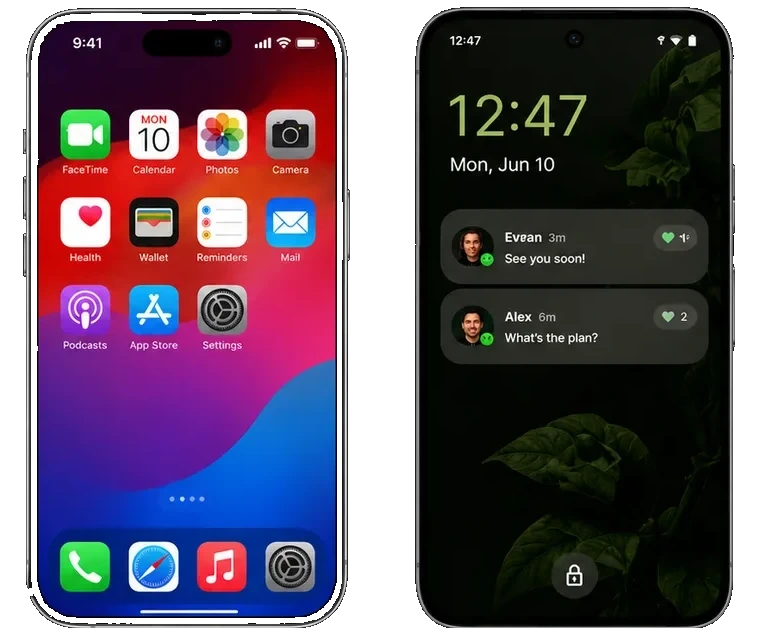
Modern Android apps built for performance.
 Kotlin
 Jetpack ComposePlay Store Ready
 Optimized & Reliable
Build for every screen
A first-class iPhone app that follows Apple’s patterns, and an Android app that feels at home on Pixel and Galaxy — not a website in a WebView.
iOS
Swift and SwiftUI apps for iPhone and iPad, with Face ID, Apple Pay, widgets, and App Store review from day one.
Android
Kotlin and Jetpack Compose apps that stay fast on flagship and mid-range phones, with Material 3 and Play Console built in.
What we deliver
Whether you need a new iPhone app, a Play Store product, or both platforms in parallel, the suite below covers consulting through launch and the years of OS updates that follow.

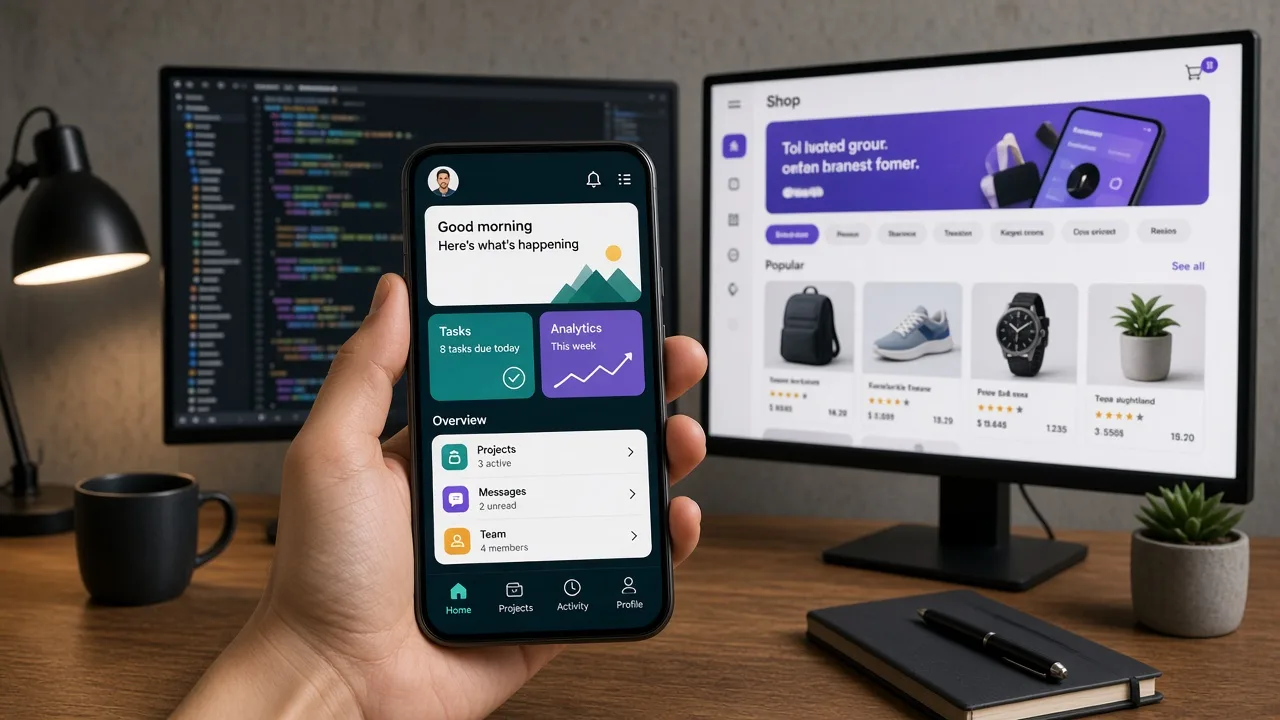
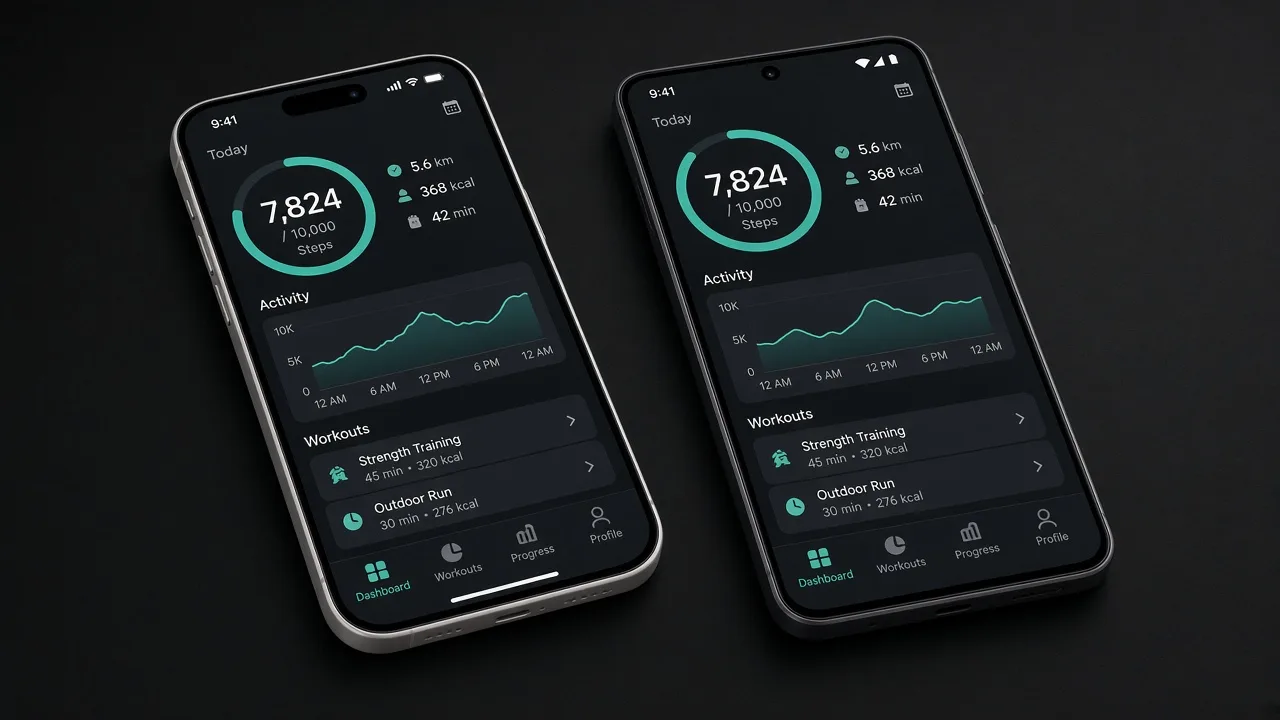


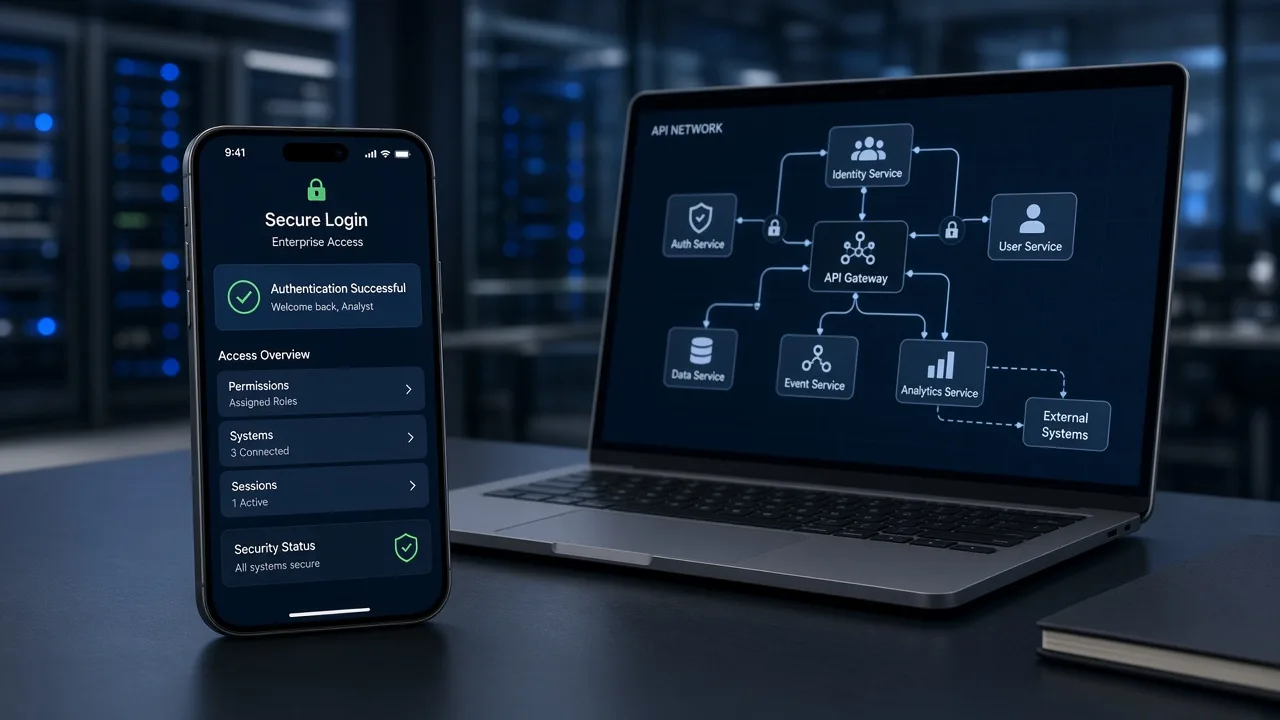
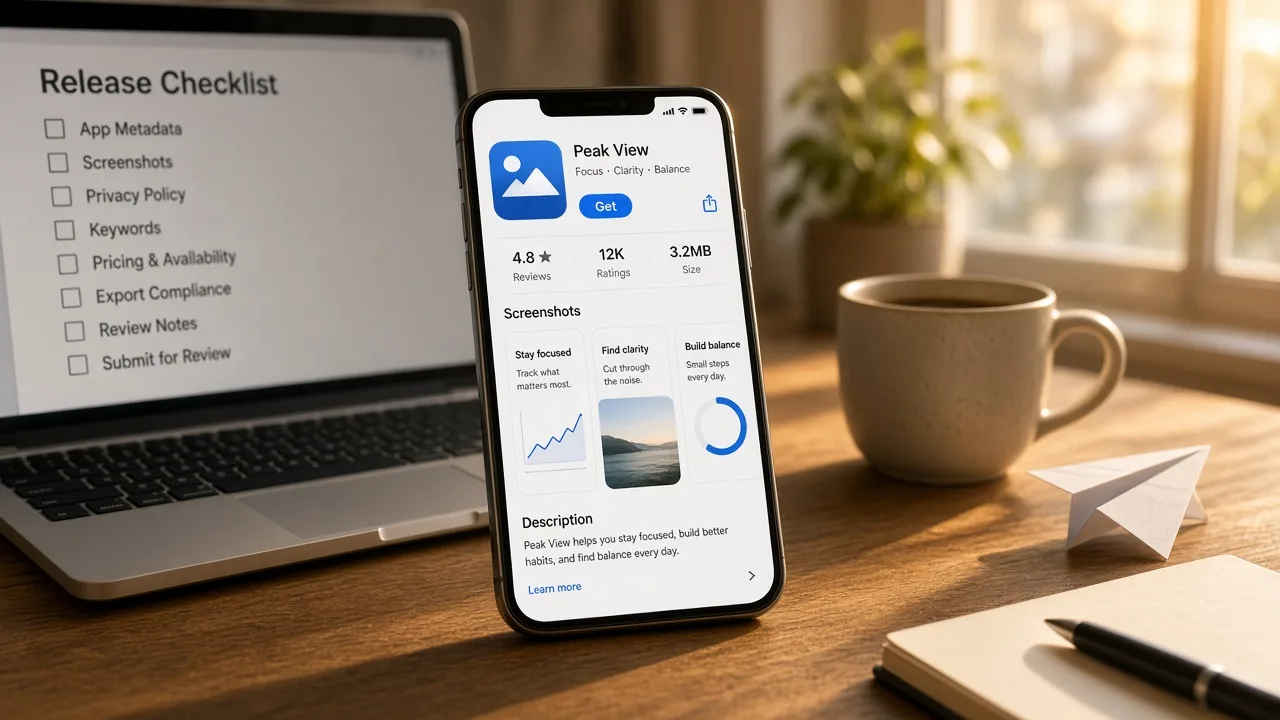
We design and engineer iPhone and iPad apps in Swift and SwiftUI, with UIKit where a mature codebase needs it. The work covers navigation, offline storage, push notifications, widgets, Apple Pay, and App Store submission — built to Apple Human Interface Guidelines so the product feels native, not ported.
• Scalable & Secure:
Build Swift and SwiftUI apps with Combine, Core Data / SwiftData, Keychain, and enterprise-ready privacy, data protection, and App Store compliance.
• Feature-Rich:
Ship widgets, Apple Pay, Face ID, TestFlight pipelines, App Store Connect listings, and privacy labels without a last-minute scramble.
Our Android team ships Kotlin apps with Jetpack Compose, Material 3, and the latest Android SDKs. We handle fragmentation across devices, background work, Play feature modules, and Play Console rollout so the app stays fast on both flagship and mid-range phones.
• Expert Guidance:
Plan Kotlin, Coroutines, Jetpack, Room, and Hilt architecture with a timeline from prototype to Play Store launch.
• Enterprise-Ready:
Deliver Play Console tracks, staged rollouts, Data safety forms, and API integrations that hold up on real Android hardware.
When the product needs two first-class apps, we run iOS and Android in parallel with a shared product spec, design system, and API contract. You get platform-native UX without two disconnected roadmaps or duplicated business rules on the server.
• Shared Product Core:
One backend, analytics, and feature-flag strategy so business rules live once and both clients stay aligned.
• Parity Without Ports:
Plan releases so iOS and Android do not drift — native UX on each OS, same outcomes for users.
Before we write production code we settle platform choice, MVP scope, compliance, and integration risk. Consulting is useful when you are choosing native versus React Native, estimating a 2026 budget, or deciding what must ship in v1 versus v2.
• Product and Technology Roadmapping:
Map features, architecture, platform choices, user flows, release phases, and delivery priorities around business goals.
• Risk and Opportunity Assessment:
Find gaps in usability, security, scalability, store policy, integrations, and performance before they slow the project.
We add on-device and cloud AI where it changes the product: camera analysis, recommendations, voice, document capture, and in-app copilots. Models stay behind your API or on-device runtimes so user data is not scattered across third-party tools.
• Intelligent User Experiences:
Add on-device ML, LLM APIs, camera intelligence, voice, and privacy-preserving prompts where they improve the product.
• AI-Driven Operations:
Use models for recommendations, document capture, and in-app copilots — the same approach behind products such as Bud Proof AI and Fluent Fox.
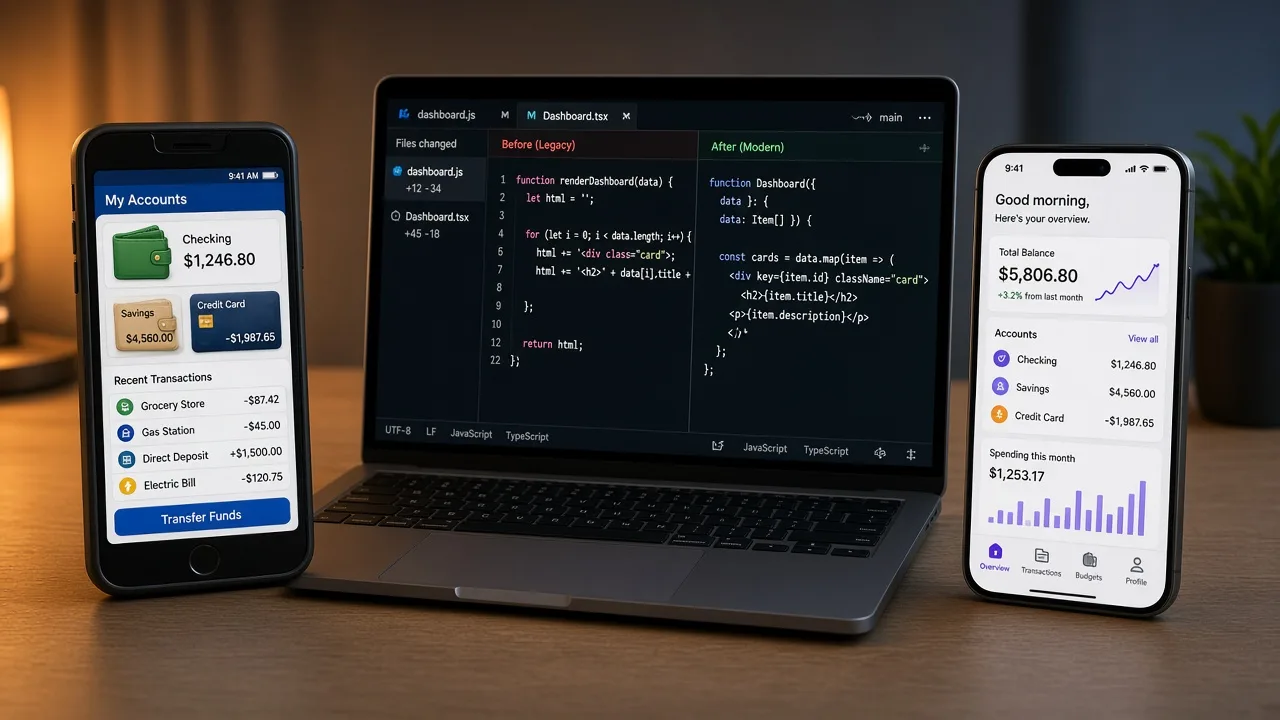
Older Objective-C, Java, or abandoned hybrid shells slow releases and fail new store rules. We modernize in stages: dependency upgrades, crash reduction, UI refresh, then module-by-module rewrites so users are not forced into a big-bang cutover.
• Architecture and Code Modernization:
Upgrade OS, SDKs, privacy manifests, and 64-bit support while replacing brittle networking and unmaintained plugins.
• Business Continuity-Led Migration:
Modernize in planned stages so users keep access while modules move to SwiftUI, Jetpack Compose, or a current backend.
A native app is only as useful as the systems behind it. We connect iOS and Android clients to REST or GraphQL APIs, CRMs, ERPs, payment processors, identity providers, and custom Node.js or Python backends with auth, retries, and offline queues.
• API-First System Connectivity:
Build secure APIs, SSO, OAuth, and role-based mobile access so the app exchanges data reliably with internal systems.
• Unified Enterprise Workflows:
Keep login, reporting, and operational data in sync — including offline queues when the network is poor.
Launch is not the end of native development. We monitor crashes, OS breaking changes, store policy updates, and conversion on listing pages, then ship patches and features on a cadence your users can trust.
• Release Trains:
Crashlytics, performance traces, TestFlight and Play tracks, and a cadence for OS updates after launch.
• Ongoing Support:
Retainer or sprint-based iOS and Android maintenance so store policy and device changes do not stall the product.
We design and engineer iPhone and iPad apps in Swift and SwiftUI, with UIKit where a mature codebase needs it. The work covers navigation, offline storage, push notifications, widgets, Apple Pay, and App Store submission — built to Apple Human Interface Guidelines so the product feels native, not ported.
• Scalable & Secure:
Build Swift and SwiftUI apps with Combine, Core Data / SwiftData, Keychain, and enterprise-ready privacy, data protection, and App Store compliance.
• Feature-Rich:
Ship widgets, Apple Pay, Face ID, TestFlight pipelines, App Store Connect listings, and privacy labels without a last-minute scramble.
Native iOS App Development
Selected work
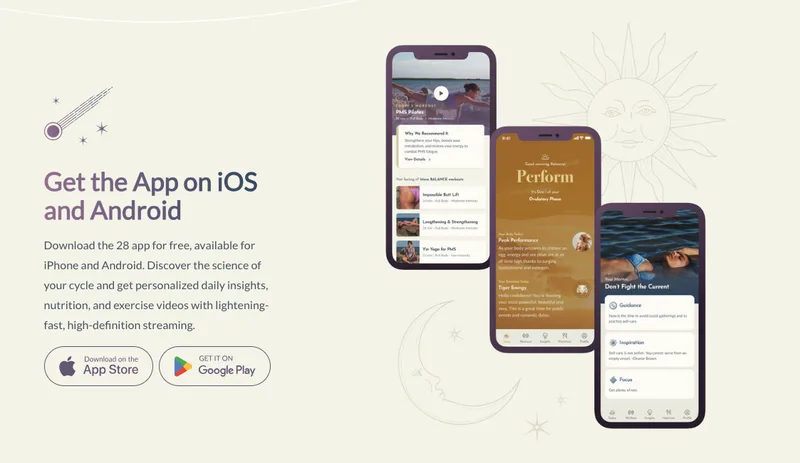
These are live Zupitrix builds — wellness, marketplaces, habits, and AI learning — not generic stock case studies. Each one required iOS and Android thinking, even when the implementation used a shared client.
Wellness · iOS & Android
Industries
Healthcare data, marketplace liquidity, and AI camera pipelines all fail in different ways on a phone. We shape native features around the workflow, not a cloned template.
Why Zupitrix
A native app is a long-lived asset. You want a team that has released to stores, survived review, and planned the version after the version you are buying today.
Our iOS and Android work sits in production: wellness, education, AI camera, marketplace, and social products with real users. Architecture choices are ones we have already operated after launch, including crash rates, store reviews, and OS upgrades.
You are not hiring isolated Swift or Kotlin contractors. Design, mobile engineering, APIs, cloud, and QA sit in one delivery team so the iPhone app, Android app, and backend stay aligned.
Privacy manifests, Play Data safety, biometric auth, and encrypted storage are planned in discovery. That avoids last-minute App Store or Play rejections and expensive rewrites before launch.
We stay for analytics instrumentation, A/B tests, OS compatibility, and feature sprints. Native apps age with every Apple and Google release; maintenance is part of the engagement model, not an afterthought.
We pick the stack that matches the product — native Swift and Kotlin when the OS matters, Flutter or React Native when one codebase is the better bet, then wire in cloud, APIs, and on-device or cloud AI where they change what the app can do.
The same delivery team covers iOS, Android, backends, and release tooling: REST and GraphQL, AWS, Azure, and GCP, plus Fastlane and GitHub Actions so TestFlight and Play tracks are not manual heroics after launch.
Technologies we use: Swift, Kotlin, Flutter, React Native, Jetpack Compose, Firebase, GraphQL, REST, AWS, Azure, GCP, AWS Bedrock, Docker, Kubernetes, Terraform, GitHub Actions, Python, Node.js, PostgreSQL, Fastlane.
Product capabilities
These are the building blocks we implement most often. You will not need all of them in v1; we sequence what affects activation, trust, and revenue first.
How we work
The process is designed for store constraints and real devices. Discovery is short enough to start, and strict enough that engineering is not guessing screens in week six.
We map users, compliance, devices, and whether native, React Native, or a mix is the right investment. The output is a scoped MVP, risks, and a delivery plan.
Flows are designed to each platform’s patterns — navigation, typography, and gestures — then prototyped so stakeholders can tap through before engineering ramps.
We define auth, offline rules, push, analytics, and the backend contract both apps will share, including environments and secrets handling.
Swift and Kotlin teams ship in short iterations with PR review, automated checks, and device builds you can install from TestFlight or Play internal testing.
Functional, regression, performance, and store-guideline testing on physical iPhones and Android devices — not only simulators — including poor network and background cases.
We submit listings, respond to review questions, watch crash-free sessions, and patch quickly in the first weeks after release.
FAQ
Straight answers on cost, native versus cross-platform, timelines, store submission, and what you own at the end of an engagement.
Let's build something amazing together. Contact us to discuss your project and see how we can help bring your vision to life.
Fill in the form and we'll respond within one business day — personally, not with a template.


