
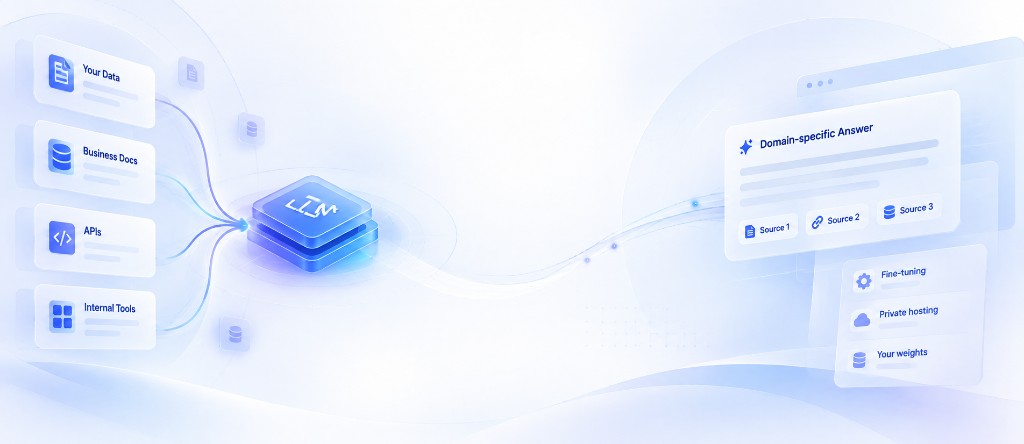
When an API is the wrong default
Cost, latency, or data-residency can make a generic endpoint the expensive option. We quantify that before we train.
Custom LLM development
Fine-tune, distill, or privately host a model when a generic API is too costly, too generic, or cannot leave your network. You own the weights we train for you.
Decision matrix
Most products should start with a hosted API plus RAG. These are the cases where training or private serving earns the cost.
Healthcare, finance, or defense constraints that rule out sending prompts to a public API.
Legal, industrial, or internal jargon a general model keeps getting wrong even with retrieval.
High volume where a distilled local model beats per-token pricing within months.
Inference next to the factory, clinic, or store — not a round trip to a US region.
What you get
Fine-tuning is only half the job. Serving, evals, and product hooks ship with the weights.
Cost, latency, or data-residency can make a generic endpoint the expensive option. We quantify that before we train.
Instruction data from your tickets, reports, or style guide — not a scraped internet dump.
vLLM, TGI, or managed endpoints in your AWS, GCP, Azure, or on-prem GPU cluster.
Adapters and checkpoints we train for you transfer. Base-model licenses stay what they are.
Lab work
We only train when a smaller prompt, RAG, or a cheaper API cannot hit the bar. When we do train, serving and evals ship with the model — not a notebook.
Decision
We measure the generic model on your tasks first. Fine-tuning starts only if retrieval or prompting cannot meet quality, cost, or residency.
Data
We turn tickets, reports, and expert edits into training rows — with PII handling and a hold-out set the training run never sees.
Training
LoRA / QLoRA adapters, continued pre-training on domain text, or distillation into a smaller model you can actually afford to serve.
Serving
Open-weight or licensed models behind your auth, with batching, quantization, and autoscaling matched to traffic — not a demo GPU left on overnight.
Quality
Task scores before cutover, shadow traffic against the API you already use, and regression gates so a new adapter cannot tank support overnight.
Product
A custom LLM is useless as a checkpoint. We ship the API, admin, and client that call it — web, mobile, or an internal tool.
How we work
We prove the hosted API first. Training starts only when the numbers and constraints say it should.
A short call on the decision you need, existing systems, data, and whether custom AI is the right spend. Mutual NDA first.
Architecture, scope, timeline, and cost in a written proposal — including evals, cloud, and what you will own at handover.
Engineers build and test with regular working releases on shared staging. You see retrieval quality, vision accuracy, or agent tool use on real examples.
We deploy into your cloud, transfer repositories, documentation, and IP, and leave monitoring so the system does not silently drift.
Why train with Zupitrix
The people who scope the project build it. You are not handed off from a sales deck to a rotating bench.
If a SaaS tool or a rules engine is enough, we say so on the first call. Custom AI has to earn the spend.
Repositories, prompts, eval sets, and models we train for you sit in your accounts. No vendor lock-in tax.
Backlog, pull requests, and weekly demos. You always know what shipped, what is blocked, and why.
Case studies
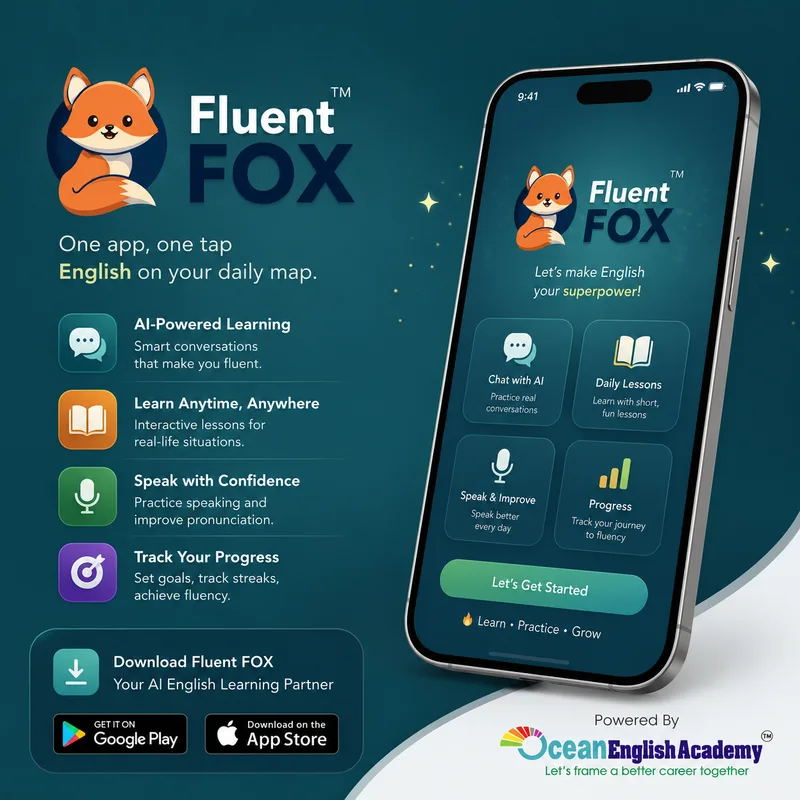
Conversational practice with virtual AI tutors — short mobile sessions, not a desktop chatbot wrapped in a WebView.

Students find experts, book live sessions, and learn on their schedule — Next.js, Python, and AWS behind the marketplace.
FAQ
Need custom llm development?
We will score the hosted model on your task, estimate GPU cost, and say whether training is justified before anyone spins up a job.
Keep exploring
Let's build something amazing together. Contact us to discuss your project and see how we can help bring your vision to life.
Fill in the form and we'll respond within one business day — personally, not with a template.